

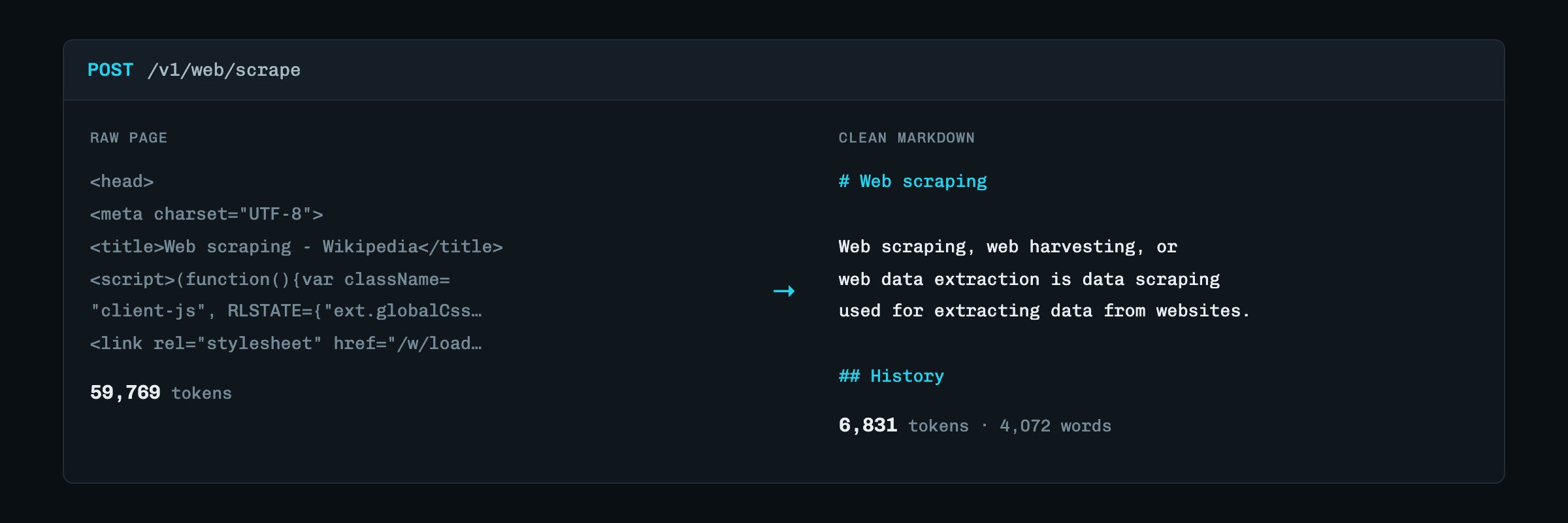
Clean Markdown
The page ships 59,769 tokens of nav, scripts and boilerplate. Your model reads
6,831 tokens of article.
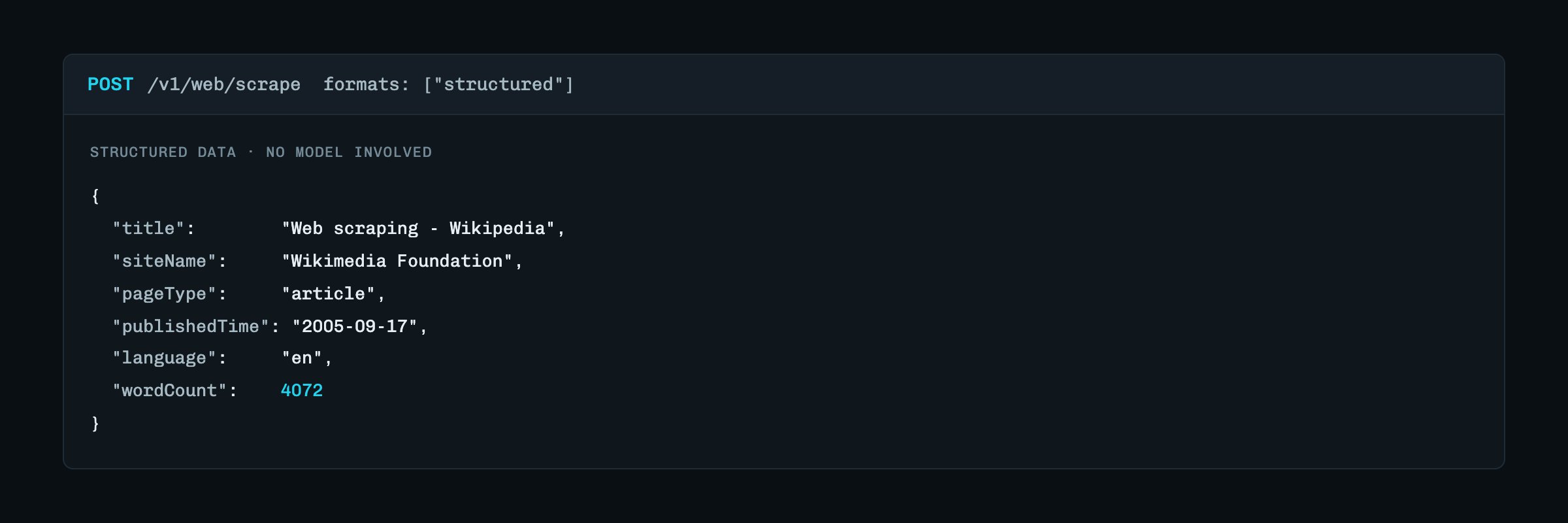
Structured data
Every page also comes back as normalized fields — title, site, type, language,
published date — with no LLM involved.
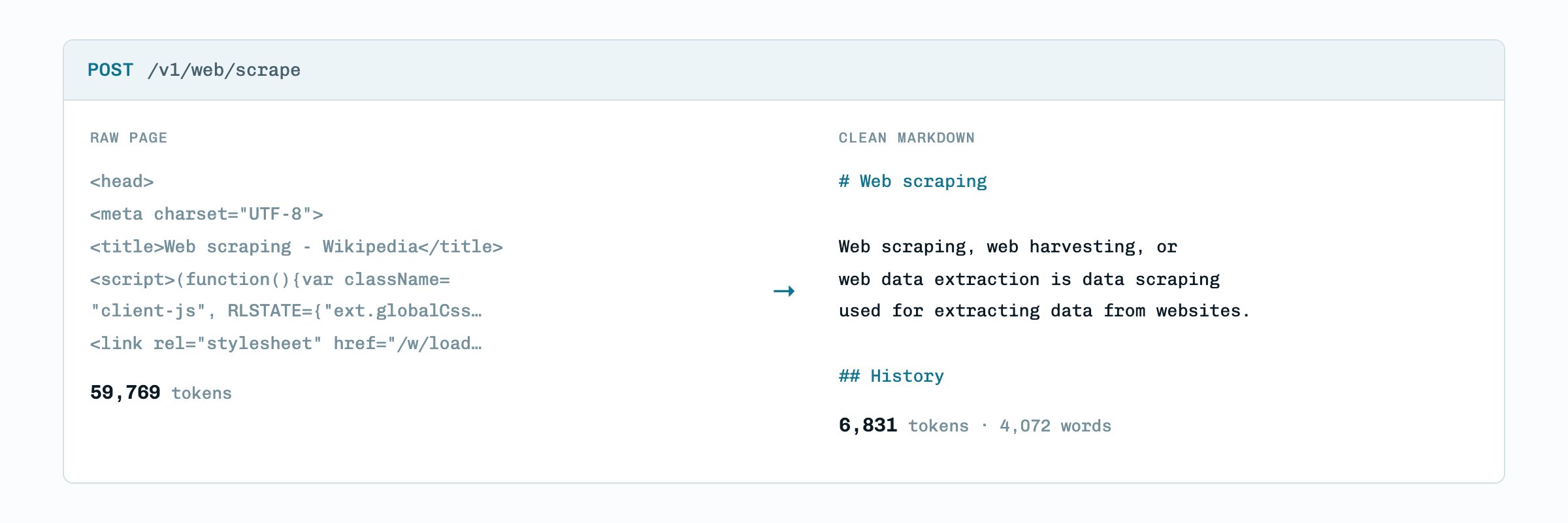
Clean Markdown
The page ships 59,769 tokens of nav, scripts and boilerplate. Your model reads
6,831 tokens of article.
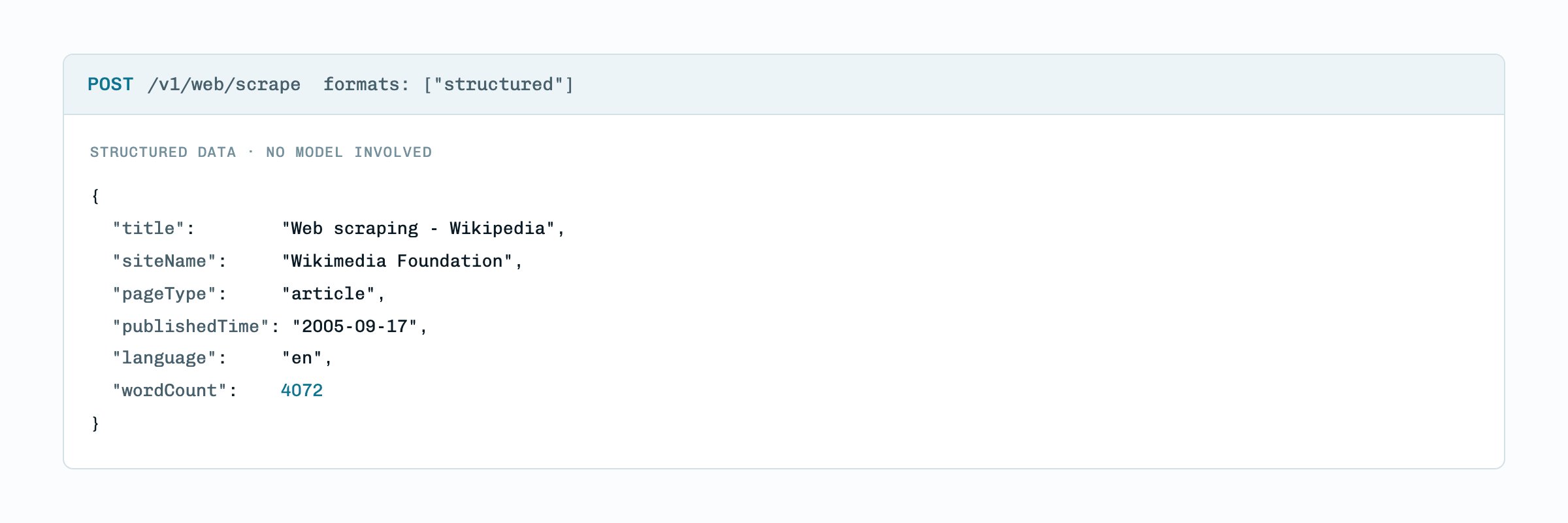
Structured data
Every page also comes back as normalized fields — title, site, type, language,
published date — with no LLM involved.
Building with an agent
These docs are written to be read by a model as well as a person. Every page is available as Markdown by appending.md to its URL, and the API describes itself at
/mcp/tools and
/openapi.json, both without a key.
The fastest way to start is to let your agent read that and wire it up:
Prompt
where-to-use-hydrafetch
audits a codebase for where we fit, and the
full index covers scraping for
context, company research, schema extraction and dataset building.
Start here

Scrape
One URL in, clean Markdown and structured data out. The core primitive.

Map
Discover every URL on a site, fast, before you decide what to pull.

Crawl
Walk a whole site and scrape every page as one asynchronous job.

Search
Run a query and get ranked results, each scraped to clean data.

Extract
Pull schema-shaped JSON from pages, with per-field confidence and sources.

Media
Capture a full-page screenshot or collect a page’s images.
Why Hydrafetch
LLM-ready by default
Output is clean Markdown and normalized structured data. No boilerplate, no
navigation cruft, no half-rendered pages.

One surface for the whole job
Scrape, crawl, map, search, and extract share the same options and the same clean
response shape.

Trustworthy extraction
Structured extraction can return, per field, how confident it is and the exact
passage a value came from.

Predictable cost
Every call is billed in credits, charged only on success, and each response tells
you what it consumed.
Your first call
Send a URL, get clean Markdown back.How it works
1
Get an API key
Every request carries your key in the
X-API-Key header. See Authentication.2
Call an endpoint
Send a URL, or a query, to the endpoint that fits your job. Most calls return clean
data synchronously.
3
Get clean data back
Responses are LLM-ready: Markdown, structured entities, extracted JSON, links,
summaries, or images.